


ChatGPT is not a search engine. It’s an advisor.
No one I’ve talked to over the last few months uses Google for search anymore. They use ChatGPT.
Others are calling tools such as ChatGPT “Answer Engines.” But I think of an LLM more as a Personal Advisor.
It understands what you really want to know, searches, analyzes, and then recommends.
It provides you with something you can work with to make an informed decision, rather than serving up millions of sites that may or may not have the answer.
The little AI Overview at the top of Google results is Google’s attempt to stave off the loss of market share, but it’s not enough.
That band-aid doesn’t feel or act “personal” and “private,” like ChatGPT does.
The AI Overview also doesn’t save a previous question and answer, so you can’t go back to it and continue the conversation.
When I asked ChatGPT about this, at the very end of the answer, it said: “Let me know if you’d like a small script or tool to capture and log Google AI Overviews automatically — I can draft a lightweight solution.”
Above and beyond. Service with a smile. An information butler at your fingertips.
So SEO has changed forever. Now what?
How to future-proof your website for AI-driven search
Last week I was being interviewed for a podcast, and was asked the question I’ve been getting a lot lately, which is: “How do we get to the top of the ChatGPT results?”
Thank goodness the answer remains the same as before!
Google and ChatGPT share something in common. They only succeed if their users get information they can use. That hasn’t changed.
Paraphrasing Jeff Bezos of Amazon: He doesn’t look at what is changing. He looks at what is staying the same (e.g., lower prices, fast delivery) and keeps building all his businesses on those realities.
Of course, you need to know the conversational questions that people are typing. SEMRush and other tools can help with that, but you can also ask ChatGPT how to find them, and it will offer you plenty of advice.
Getting to the top of AI-driven search results
We have clients who have appeared consistently at the top of Google for a key search term for years.
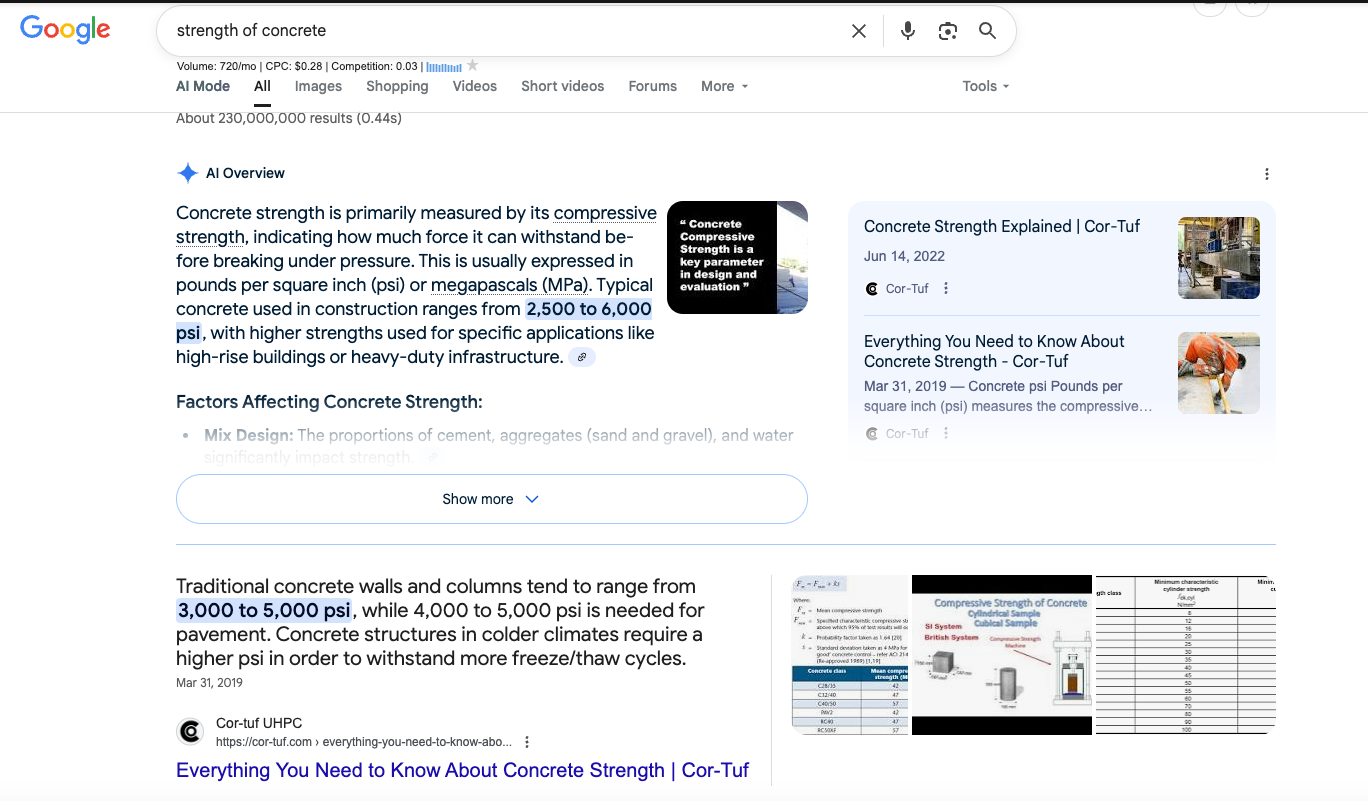
This is what happens when you type “strength of concrete” into Google. Cor-Tuf is the client:
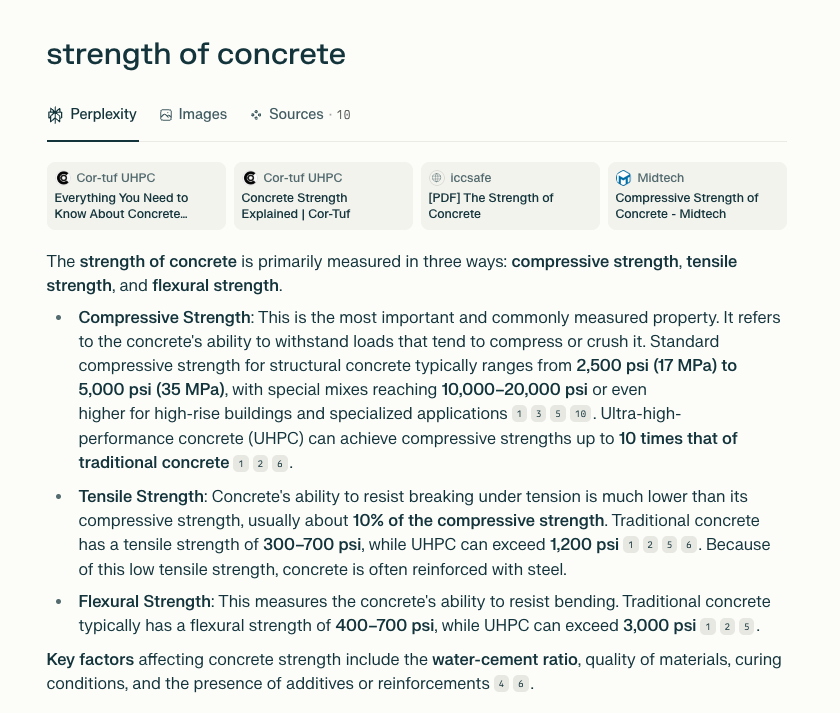
And here is what happens when you type “strength of concrete” into Perplexity, which cites sources right on top of the main result:
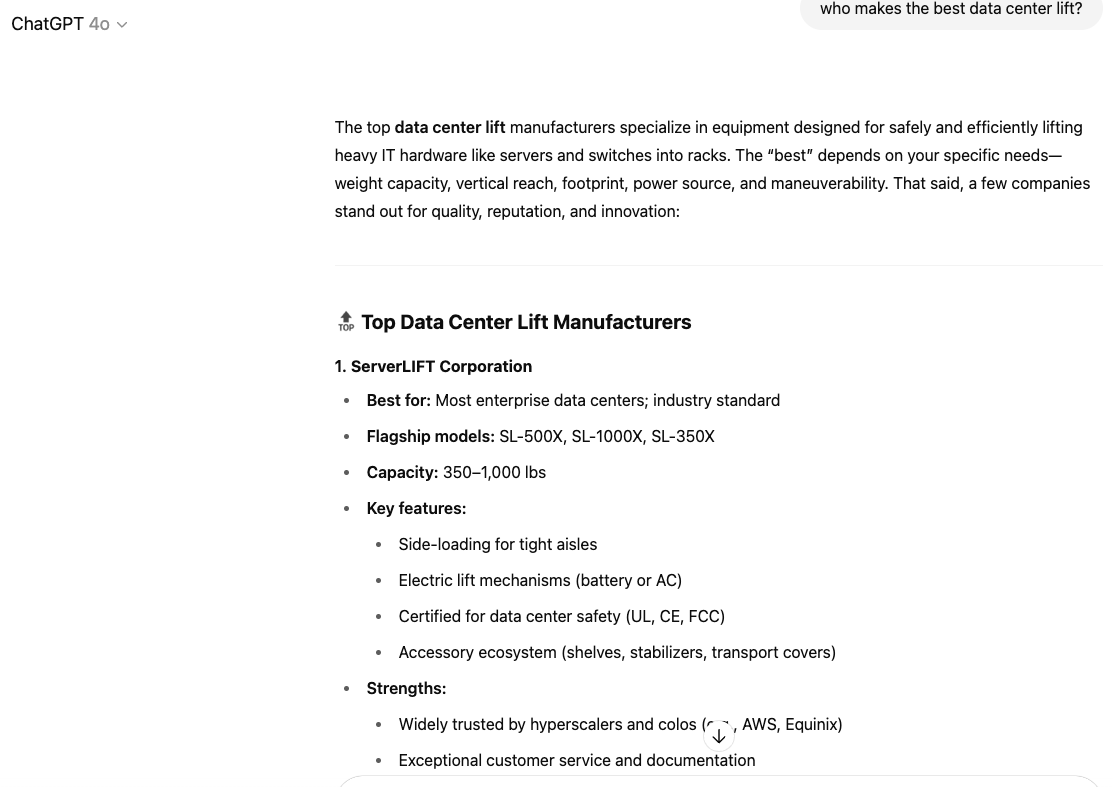
Another example, for another client. We have been writing content for them for 7 years now:
There is no substitute for useful content that makes it easier for prospective customers to learn, make decisions, and buy the best solution. And there is no easier way to find out what would appeal to customers than simply asking them.
If you own a business, hire someone who understands your industry to call 5 – 10 customers and ask them some open-ended questions (see Chapter 3 of my book). In addition to the questions in the book, ask questions such as: “What are you most interested in learning or buying in this area?” “What is your main source of this type of information?” “If you were searching for our product and you didn’t know about us, what would you type into ChatGPT?”
Every company with customers is sitting on a gold mine.
Your own customers will help you create content prospects will love if you ask them correctly.
It’s important to go beyond asking ChatGPT, because your customers bought your solution for very specific reasons. Generic advice from an AI LLM will not uncover your “special sauce.”