


Business value increases through customer experience management (CXM), right?
To be clear, business value is “health and well-being of the firm in the long run: network of relationships both internal and external — intellectual property, business model, economic value, employee value, customer value, supplier value, channel partner value, alliance partner value, managerial value, and societal value.”1
So, how are CXM metrics proving increased business value?2

The bad news is:
CXM metrics are not well tuned-in to business value.
The good news is:
You can solve these bad CX metric practices — and make CXM indispensable to business value — by shifting your approach in:
— Outcomes
— Customer Value
— Expanded Budgets
This is part 5 in a series, with the first 9 of 26 bad CX metrics practices previously published:
Importance
9) Prioritization
Comparisons
8) Internal Benchmarking
7) External Benchmarking
GIGO Data
6) Population Misrepresentation
5) Inconsistent Interpretations
4) Bias
Insults
3) Upselling After a CX Fail
2) Automating Interactions
1) Requesting a Score
10) Outcomes
Bad CX Metrics Practice #10 is this myth:
Decreasing customer outcomes increases business outcomes.
This myth is out of control! For example, newly coined words since 2020:
— Shrinkflation (size decrease)
— Skimpflation (quality decrease)
— Sneakflation (terms decrease)
Some execs feel “forced” to adopt these practices, and others assume it’s good because everyone’s doing it, or just because they can.3 All wrong!
See recent customer comments about this:4
— “Do they think consumers are stupid? Not cool.”
— “Who are you trying to kid?”
— “We haven’t been back and never will.”
— “I got back a lame excuse. I am no longer buying.”
— “They don’t make anywhere near the same amount. It ruins recipes.”
— “Those used to be really big with minimal packaging, but now they are half the size and bigger wrapping than before! Makes me furious. 😠”
What’s the consequence?
— Less trust, less retention, lower share of wallet.
— This is the opposite of CXM goals.
— And this is ripping off investors.
We’re training customers to buy elsewhere.
3 facts:
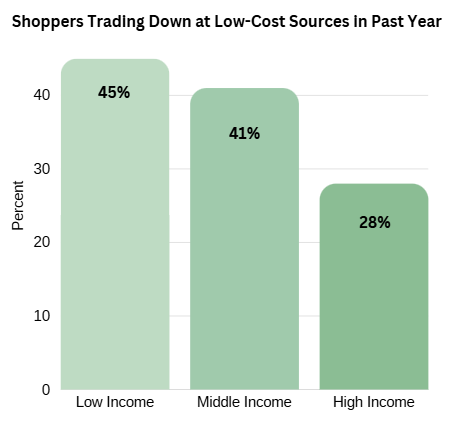
. . . “Trade-down behavior is not confined to low-income households. 45% of low-income, 41% of middle-income, and 28% of high-income shoppers reported trading down on quality in the past year [2025].”5
. . . “Households earning over $100,000 now account for 75% of Walmart’s share gains in the U.S. during its 2025 third quarter.”5
. . . “Dollar General logged its highest influx of 6-figure shoppers in 4 years, fueling a 5.3% jump in quarterly sales.”5
Customers want you to be cost-effective, so they can be, too.
— And, NOT at their expense!
— Just 52% of consumers say they’re financially secure.6
“When consumers feel financially strained, it changes what they need from businesses and how they respond to experiences, good or bad,” said Isabelle Zdatny, who led Qualtrics XM Institute’s study of 20,000 consumers across 14 countries: Australia, Brazil, Canada, France, Germany, Japan, Mexico, Netherlands, New Zealand, Singapore, Sweden, UAE, UK, and US.6
Wow! Have CXM teams researched these changes in their customers? Seems crucial.
⇒ Read Expectations VoC
“They’re more risk-averse and less tolerant of friction” continues Zdatny. “Because when you’re already stretched thin, you can’t afford the time, frustration, or cost of a purchase that doesn’t work out“.6
This makes cost decisions truly a customer experience priority!
— All this makes it harder to attract and retain customers.
— Product adoption, share of wallet, and market share all slow down.
Hence, business outcomes did not improve.7
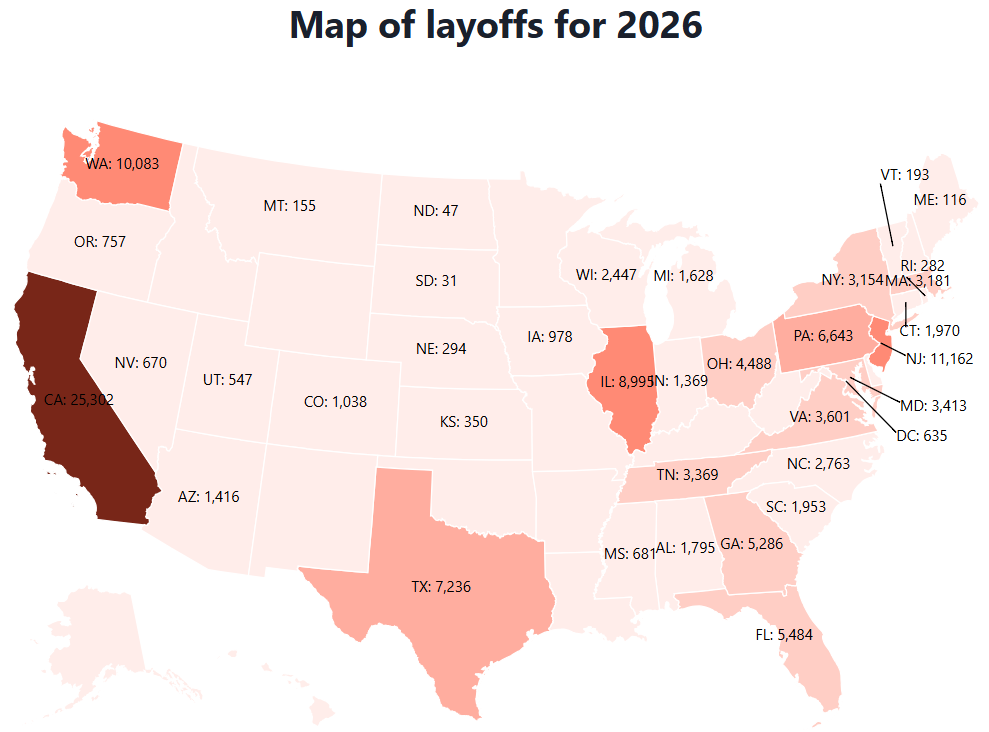
— Layoffs by 1400 US firms in 2026 to-date.
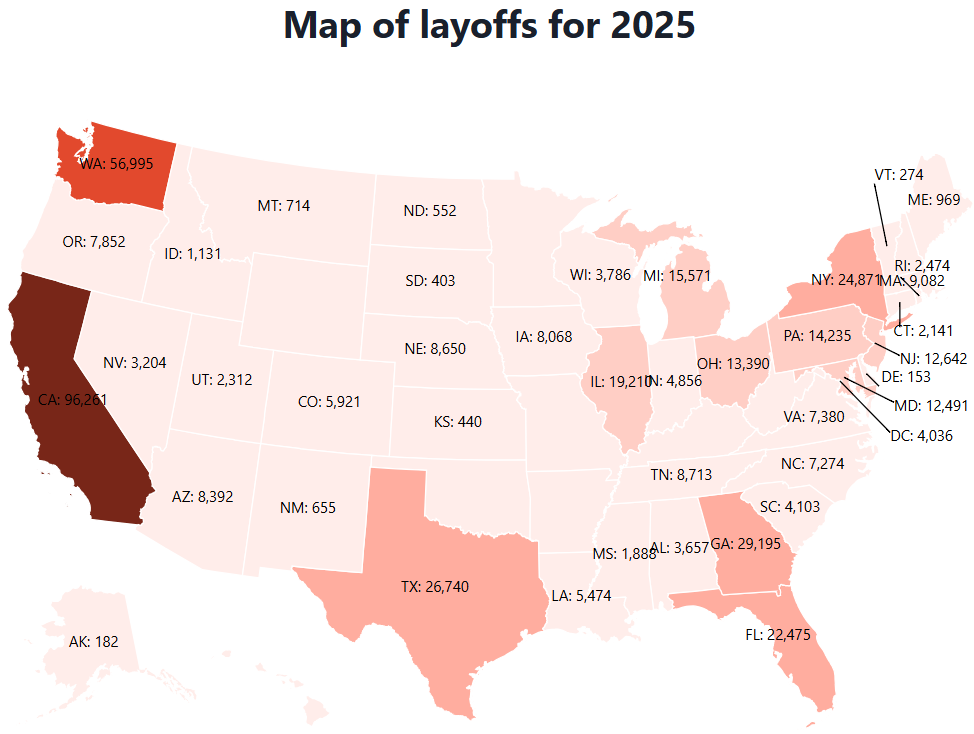
— Layoffs by 5400 US firms in 2025.
— 120K people laid off in California in 16 months.
— 67K in Washington state, 34K in Texas, 34K in Georgia.
— Similar numbers on every continent.
Solution
A. Stop blaming AI, tariffs, etc.
⇒ Read Connecting Business Outcomes and Customer Outcomes
B. Start using your imagination to reframe challenges for win-win:
“Connecta Italia is a call center (business process outsourcing (BPO) firm) in Italy with 140,000 people,” said Charlene Li, author of Winning with AI: The 90-Day Blueprint for Success. You’d assume they’d ask: “‘How do we use AI to cut the number of people we have?’ But they said, ‘No that’s not what AI is good for — it’s not that we have too many people, it’s this: Do we have enough right people? How can we use AI to increase the quality of our human agents?’ So, they used AI to reduce error rates by 85%.”8
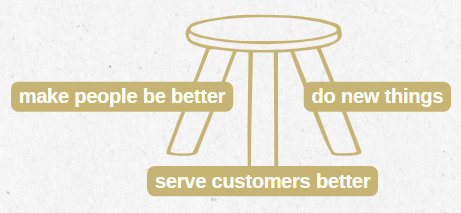
“That was the 1st leg of their 3-legged stool: make people be better,” continued Li. “The 2nd leg was: find ways to serve customers better. ‘How do we get people up-to-speed faster, so they’re better agents?’ So, they reduced training time by 30-40%. The third leg was: ‘How can we serve new customers, and do new things?‘ And they used excess capacity gained from the leg 1 and leg 2 to address a long list of things they wanted to do on behalf of their customers.”8
“So, they started building automated workflows on behalf of their clients — professional services firms, law firms, and such, who did not have the capability to do this on their own,” explained Li. “They’ve announced they will grow their employee base 5% over the next 2 years“8 — instead of austerity, or disempowerment, or layoffs, or inflation, or shrinkflation!
C. Start highlighting costs to customers = costs to business.
Start showing the cost of each customer issue, even with partial financial data.
Start quantifying costs represented by each CX metric.
⇒ Read How to Quantify CX ROI

D. Start showing the cost of inaction for prevalent issues.
⇒ Read Rethinking Costs
E. Tie these costs to the originators of the issues.
Use this as a basis for recognition and bonus pay.
⇒ Read Customer Experience Dashboards and Bonus Pay
F. Stop assuming inflation is inevitable.
⇒ Read CX Leaders Can Prevent Shrinkflation
G. Stop sloppy management, quiet quitting, and low accountability.
⇒ Read Revenue Risks
H. Stop mis-prioritizing customer outcomes and business outcomes.
⇒ Read CX Prioritization
This is how you focus first on customer outcomes as predictor and protector of business outcomes.
11) Customer Value
Bad CX Metrics Practice #11 is this myth:
Metrics about us prove value to customers.
This myth is so strong that CXM professionals struggle to suggest metrics about what value IS to customers.
What matters most to customers in 2026?9
46% say Good Value for Money
42% say Good Product/Service
41% say Convenient
37% say I’m Comfortable With Them
. . . . . . . . . . . . . . . .
29% say Good Customer Support
20% say Special Discount
Note the top 3 in this list are issue prevention.
— Support = post-issue transactions.
— Discounts offset CX gaps in all the above.
Solution
Therefore, value to customers metrics are:
— % Customers with Defect-free Product
— % Customers with Defect-free Service
— % Reduction in Inconvenience
— % Reduction in Defective Products & Services
— % Trust Increase (their view of got what was promised, your performance today is as good or better than before, being treated fairly, being respected, your straightforwardness, honesty, and their interests were considered)10
Better yet, research what your customers are pursuing in their lives or business, and how your product/service fits into that pursuit. This is also known as jobs-to-be-done research. It’s qualitative and exploratory. I call it Expectations VoC.
Accordingly, set up the North Star for company-wide decisions of all kinds. This reinforces and brings to life Business Outcomes = Customer Outcomes, and vice versa.
So, are CXM jobs ensuring the top end (value, quality), or the bottom end (Support, comfort) of the “What Matters Most to Customers in 2026” list?
No, extremely few focus on the list’s top end.
Same for CXM training, conferences, books, and certifications.
2020s CSM roles are overwhelmingly aimed at the bottom end (Support, comfort) instead of the top end (value, quality — customer-focused business).
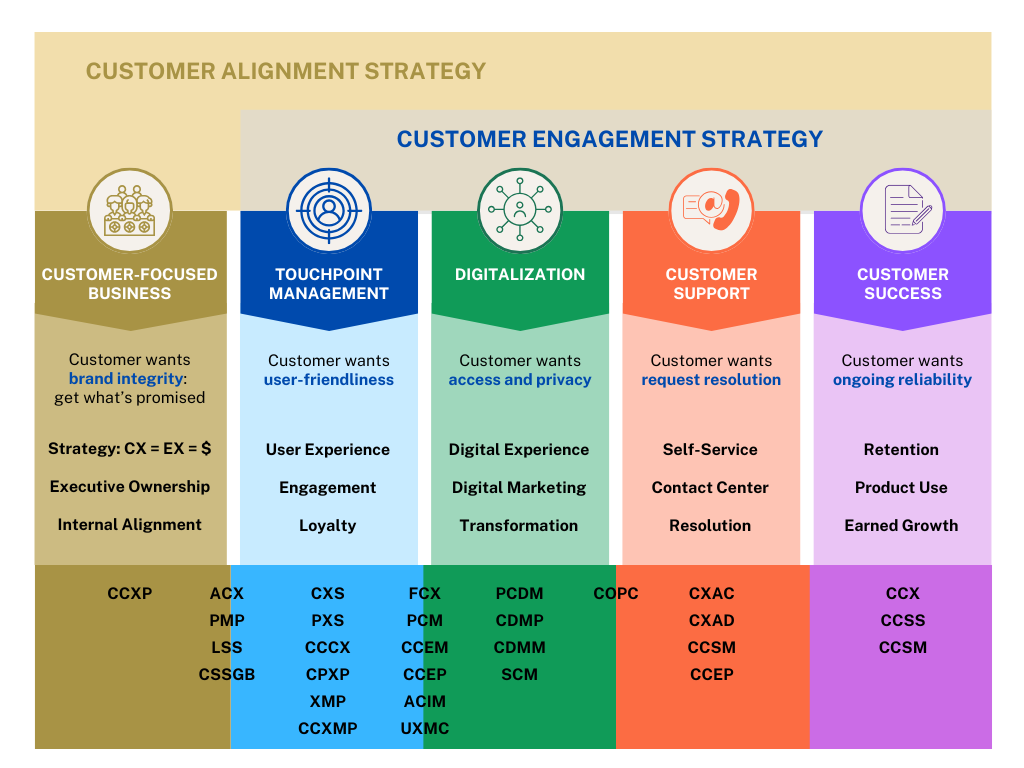
Thankfully, some CXM Leaders’ roles are indeed focused on the top end. For example, Michelle Nwoga, Group Chief Experience Officer at UBA (United Bank for Africa), explained:
“Our core CXM team has fully embedded ourselves in a lot of the operational procedures. So, now we certify every solution — internal and external — as suitable to be launched. In all business units across our holding group, customer experience is a core strategic objective with a Head of CX in each business, and CX metrics specific to each group. When CX issues arise, the relevant business unit is responsible and accountable for solutioning.”11
Likewise, Carolyn Muise, former Chief Customer Officer at NCR, Dell, and EMC, said:
“Customers bought more from us because we delivered on our promises. We set up CX executive sponsorship by every fuction across the company — including HR, IT, Engineering, Legal, and so on, no exemptions. Each of them is an advocate, on behalf of their business function, to execute a strategy based on customer feedback across the end-to-end customer journey. Each functional area measures progress and outcomes aligned to what our customers are expecting. When a CX issue arises, our core CXM team doesn’t solve it directly. The relevant executive-appointed person is responsible for their business unit to drive CX issues’ solutions.”12
This is how you grow value to customers, as best path to grow business value. This approach checks all the business value boxes: economic, employee, customer, supplier, channel partner, alliance partner, managerial, and societal value — the network of relationships, both internal and external.
12) Budget Expansion
Bad CX Metrics Practice #12 is this myth:
CXM digitalization and layoffs expand budgets best.
This myth is obvious in MIT’s report, The GenAI Divide: State of AI in Business 2025, that generative AI pilots remain stuck in the testing or prototype phase at 95% of companies. “The bulk of generative AI budgets are in Sales and Marketing functions,” explains David Eberly in The National CIO Review. “Back-office functions … deliver higher returns through cost reduction and efficiency gains. This disconnect shows a broader issue with corporate AI strategies often favoring visibility over value.”13
A great example of this is shared by Charlene Li:
“Klarna [app for payment installments] partnered with OpenAI in 2023 for an AI chatbot to do the work of 700 employees. Resolution dropped from 11 minutes to 2 minutes. Revenue per employee jumped 73%. The CEO went on record saying, ‘AI can already do all of the jobs that we as humans do.’ Fast forward to 2025. Customer complaints multiplied. The responses were generic, repetitive, and lacked nuance. AI couldn’t handle complex issues requiring judgment. Customer satisfaction scores dropped sharply. So what did Klarna do? They quietly started rehiring people. They experimented with remote [Support] agents and a hybrid gig workforce. And now the CEO says, ‘It’s important that customers always have a clear path to a human’. They started with technology, not strategy. They optimized for cost, not value. They measured efficiency, not outcomes. They forgot that customer trust is built by humans.14
Indeed, paying attention to the points made earlier in this article, as a basis for customer experience-related AI, could make all the difference to success.
“Many companies are turning to AI to scale their [Support] efforts, but early results are concerning,” says Lauren Braun about Qualtrics’ 2026 Consumer Experience Trends Report. “Nearly 1 in 5 consumers who used AI for Customer Support saw no benefits at all, a failure rate almost 4 times higher than other AI use cases. Rather than solving customer problems, poorly deployed AI risks creating more frustrated customers who decide to walk away. Fewer than 1 in 3 consumers provide feedback to companies, marking an all-time low. It means that rather than giving companies a chance to make things right, customers will simply spend less or take their business elsewhere, leaving organizations to discover the revenue loss after the fact. 34% of consumers reduce their spending with a company after a negative experience, and 13% cut their spending entirely.”15
Certainly, this is not the best path to expand the budget for growth!
Indeed, top CX problems are worsening — not improving!15
| 2025 | 2024 | Cause of Poor Experiences |
| 46% | 43% | Service delivery issues |
| 45% | 43% | Communication problems |
| 37% | 33% | Pricing concerns |
| 37% | 33% | Product quality/failure |
| 27% | 26% | Employee interactions |
| 22% | 18% | Post-purchase Support |
Solution
Budget for growth expands by eradicating root causes of prevalent issues bothering customers.
- Anything we do that bothers customers starts a cost spiral with no end in sight.
- Shortcuts and bandages on dysfunction only make things worse: frustrating and repelling customers, and robbing investors both by the shortcuts’ investments and the aftermath.
- Instead, engage every manager in getting to the heart of the internal and/or external CX issues that they cause.

This template was used weekly by every account team, product line, and functional area when I led company-wide CX alignment for many years at Applied Materials (semiconductor equipment maker). It’s the outcome of a 5 Why’s exercise in a day-long workshop to eradicate root causes of a prevalent issue bothering internal or external customers.
In this template, each root cause maps to each action item. Otherwise, you’re cutting corners, and the costly issue will resurface.
Stay tuned for the next article in this series, explaining true Leading Indicators. You’ll need that to properly track, recognize, and reward the progress chart in the right-hand corner of this template.
How budget expands by eradicating 1 prevalent issue:

A study by the London School of Economics discovered that eradicating causes of negative-word-of-mouth increases revenue 300% compared to increasing positive word-of-mouth by the same amount.16

This is how you expand budgets for growth: stopping root causes of prevalent issues forever, which frees up otherwise sunk costs forever. Furthermore, you’re freeing up talent from being bogged down with trouble-shooting, to instead have greater bandwidth for creativity.
This precious budget and talent can be re-assigned to untapped growth opportunities: new markets and products and alliances, along with empowered budget stewardship, hiring, salary increases, and profit-sharing.
Conclusion
Each aspect of business value is precious to investors and customers alike. Any weak aspects are a disappointment and a rip-off to both investors and customers.
This is why Customer Experience Leaders link everything across the enterprise to the pains and gains of customers. They engage all roles enterprise-wide in owning CX performance: permanently solving prevalent issues and preventing issues altogether.
This is how budgets expand sustainably, how value to customers grows, and how customer outcomes propel business outcomes.

Stop these bad CX metrics practices now, to allow all parties to enjoy significantly greater business value for years to come.
References
1 Business Value, Wikipedia.
2 Executives’ Guide to Customer Experience Value: Metrics, by Lynn Hunsaker, CustomerThink, 2025.
3 CX Leaders Can Prevent Shrinkflation, by Lynn Hunsaker, ClearAction, 2022.
4 Shrinkflation Examples, by Megan Liscomb, BuzzFeed, 2025.
5 High-Income Americans Go Bargain Hunting and Shake Up Retail’s Royalty, PYMNTS, June 5, 2025.
6 Half of customers are feeling financial stress. It’s shaping how they judge brands, by Lauren Braun, Qualtrics, January 6, 2026.
7 Layoffs from Public Records, WARNTracker, April 28, 2026.
8 From AI Experiments to Impact: Your Growth Leader Playbook, by Charlene Li, The Mindful Marketer Podcast by Lisa Nirell, April 1, 2026.
9 2026 Global Customer Experience Trends Revealed, Qualtrics, October 7, 2025.
10 Four Factors of Trust, by Ashley Reichheld and Amelia Dunlop, Deloitte.com.
11 Executive Ownership of Customer Experience Excellence, by Michelle Nwoga, Customer Alignment Leaders Podcast, September 5, 2024.
12 Executive Ownership of Customer Experience Excellence, by Carolyn Muise, Customer Alignment Leaders Podcast, December 9, 2024.
13 MIT Finds GenAI Projects Fail ROI in 95% of Companies, by David Eberly, The National CIO Review, August 20, 2025.
14 The Difference Between AI-First vs. AI-Ready is More Important Than You Think, by Charlene Li, Leading Disruption, February 11, 2026.
15 Businesses Risk $3 Trillion in Sales From Poor Customer Experiences as Consumers Cut Spending, by Lauren Braun, Qualtrics, November 12, 2025.
16 Advocacy Drives Growth, London School of Economics, May 9, 2005.
This Article Series
This is the fifth of an 8-part series: 26 Bad CX Metrics Practices to Stop in 2026.
Part 1: Insults repel customers: the opposite of your goals.
1) Requesting a Score: disrespects customers’ truth.
2) Automating Interactions: disrespects unique situations.
3) Upselling After CX Fail: warps the value proposition.
Part 2: GIGO Metrics: misleads managers.
4) Bias: shows your self-centicity.
5) Inconsistent Interpretation: makes CX data invalid.
6) Population Misrepresentation: makes CX data irrelevant.
Part 3) GIGO Benchmarking: wastes energy.
7) External Benchmarks: deceptive, slippery slope.
8) Internal Benchmarks: uneven playing field.
Part 4) Prioritization: undermines potential.
9) Prioritization: quick wins squelch giant gains.
Part 5) Business Value
10) Outcomes:
11) Customer Value:
12) Budget Expansion:
Coming Soon
— Part 6) Leading Indicators
— Part 7) Goal Silos
— Part 8) Metric Silos
So well written, Lynn and correct. You need to measure customer value to get business value
Many thanks, Gautam. We’ve always agreed about the inherent connection of customer value to all executives’ goals. You’re one of my favorite authors about customer value and business value. I recommend readers to get your books: Customer Value Investment, Total Customer Value Investment, etc.