


Part 1 of 3.
I’ve worked with hundreds of business owners and CEOs. But only three company leaders stand out to me as truly customer-centric: Lou Gerstner, Fred Smith, and Jeff Bezos.
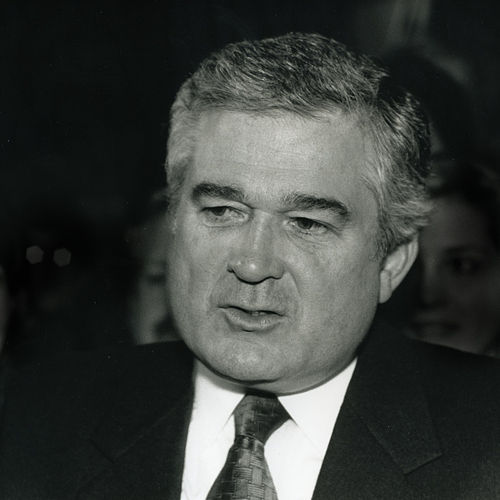
Let’s start with Lou Gerster, CEO of IBM from 1993 to 2002. I consulted with IBM before, during, and after his tenure. I saw firsthand what a difference one good leader could make. The shift was stark.
There is absolutely a direct correlation between executive leadership and revenue.
He was the top boss of about 250,000 people when he started and 307,000 people when he left.
I say this because that’s a lot of people to influence; anyone who has led a company knows that getting even 20 people on the same track is a challenge. But he did it.
Customers are the most important aspect of any company. Without them, there is no company.
Then why is it so rare for company leaders to be customer-centric?
Because they have other priorities.
They are focused on something besides customers, such as investors, board members, managers, their own personal goals, and the drive to prove something to the world.
Lou had turned around Nabisco and American Express before joining IBM. When he came on board, the first quotable message he put out was, “The last thing IBM needs right now is a vision.”
The press was horrified. I was intrigued.
Rather than focus right away on an “IBM revenue growth strategy,” after coming on board, “Gerstner asked every one of the fifty members of the senior management team to visit at least five major clients in the next three months, and for each of their direct reports to do the same.” (Jonathan Gifford)
And, quoting Gerstner: “I came to see, in my time at IBM, that culture isn’t just one aspect of the game—it is the game.”
Gerstner was an IBM customer while at American Express.
So it is no surprise that on his list of expectations for IBM, as he wrote in his book, was: “Everything at IBM would begin with listening to our customers and delivering the performance they expect.”
What do customers expect? Asking them via surveys won’t tell you that. Depending on AI won’t, either. The only way you’ll get that information is to talk to the customers themselves.
The popular concept at the time was to break IBM up into “baby blues,” but Gerstner took the opposite approach. The size of IBM could be its strength, with an emphasis on services over products. Of course, this would only work if IBMers put the customer first.
Lou made it clear from the start that IBMers would be held accountable for customer satisfaction. That alone is a strategy that drives growth and gets the wheels moving in the right direction.
If you want to be as successful as Lou and make sure you are leading with a customer-first strategy, here’s what I recommend:
- Read his book, if you haven’t already.
- Start visiting customers yourself regularly, and require your top managers to do the same.
- Hire a trusted consultant to help you understand what your customers want and figure out how your company can deliver it (this is what we do).
- Make every decision start with, “What would our customers want?”
What I learned from Lou is that companies can only become customer-obsessed if the top leader is customer-obsessed.
In 1993, when Gerstner took over, IBM posted an $8 billion loss for the 1992 fiscal year. When he stepped down in 2002, IBM’s revenue was $81.2 billion.
Being obsessed with customers pays off, big time.
Image credit: Wikipedia