


It was 1977, and I vividly remember riding in the front seat of my mom’s rusty, off-white Plymouth Valiant. I think I had my teeth clenched on the green dashboard above the glove box while we made our way to the local Acme for the weekly haul. On return, we took a quick right on our way to the Ice Cream Shack, and the g-force of the turn emancipated my door (and me) from the vehicle. The door swung out onto the street on its rusty hinges, with me hanging to it like a windsurfer, my arm grasping the window for dear life. While we were only going 20 mph or less, I wasn’t expecting that kind of adventure… but as a 6-year-old, it was kind of cool.
The people who didn’t think it was cool were my mother, who was driving, my father, who learned later, or the local police officer on the scene who showed up primarily to try and fix the vehicle with binder twine. The door latch had failed in the passenger seat, so the officer secured it with the thick twine, and I climbed into the vehicle via the passenger side window, Duke-Boys style. Yee haw!
Not wearing a seat belt in 1977 wasn’t the social taboo it is today. At the time, only 14%[1] of Americans wore a seat belt. They started installing them in cars starting in 1968, but most people ignored them. Somewhere in the 1980s, Ford introduced seat belts that came on automatically. While pushing the needle a bit, it never really caught on. Fast forward to 2025, and 91% of drivers wear a seat belt for almost every trip[2].
It took 40 years for the US population to change one two-second behavior. Was it worth it? Probably.
There was a 41% reduction in traffic deaths from 1975 to 2023 and a 61% decline in the death rate per 100 million miles traveled in that same period. While this decline is not completely attributable to seat belts, it helps. The National Safety Council reports a 45% reduction in death and a 50% reduction in serious injury by wearing a safety belt[3].
Little nudges can have big consequences when applied to millions of people. But how did they do it? Well, it wasn’t one thing; it was a combination of laws, enforcement, and most importantly, communication. They used many approaches to nudge behavior. It wasn’t easy, but it was effective.
The Power of “Nudges”
Thaler and Sunstein wrote a book about “Nudges” in 2009[4], but the history of influencing behavior goes much further back in time. Using communication and other forms of influence to change behavior has been used from the beginning of time. Nudging can be used to do amazing things (March of Dimes) or horrible ones (The Third Reich). While transforming the world is a lofty goal, most of us are charged with the influence of more mundane matters. We may be trying to get customers to put more cheese into their cart, to return that insurance form on time, to consider buying an electric vehicle, to sign up for that extra insurance, or even get large fries instead of medium.
Some goals are admirable and good for society; others are more profit-driven but the mechanics of influence are the same. Here are some well-known, but not well-documented, tactics to influence consumer behavior.
Be Clear About the Desired Behavior
The precursor and the first step in attempting to influence consumer behavior is defining what you want the consumer to do. Do you want them to pick up a product, view information about the product, or use it? The important thing to keep in mind is that it is much easier to get small changes in behavior vs. larger ones. Small and large not only in terms of the time required, but also in the psychological effort. Getting someone to take 2 seconds to buckle a seat belt is much easier than getting them to quit smoking.
Successive approximations
Therefore, if you want a large behavior change, you start with small changes in behavior. This has a legacy in psychology pioneered by Albert Bandura in what he called “shaping”[5] – that is, start with rewarding small behaviors to get to a larger behavior. If you want people to help support a non-profit, then the first step might be to sign up for a newsletter. The second might be to provide feedback on a new initiative the non-profit is pursuing. The next might be a small request for time at home to work on a part of a project. Through the act of reinforcing each small step toward a larger goal, you can influence consumer behavior.
Create a New Normal
People are notoriously averse to change. As a species, change is associated with uncertainty, and, if there is one thing humans hate, it is uncertainty. Therefore, you have to create a new “normal.” We were not born believing that brushing your teeth every morning is normal; this had to be learned and then so routinized that it has become nearly automatic behavior. How do you create a new normal? You have to show high payoff for the new behavior in order to disrupt the ‘automatic’ one, sometimes called ‘system 1’ or normative decision making.
Take, for example, a water utility we worked with in the past. They found out they were spending millions of dollars printing, stuffing, and mailing bills to customers. Realizing this was a waste for both the company and customers, they wanted to find a way to move people from paper to online. We found that simply by asking, many ignored the request. Curious, we asked why. Most people didn’t have a good reason; it was just behavioral inertia.
We found that different appeals can disrupt this behavior. We can focus on convenience by consolidating all customers’ information in one place. We can make it easier to pay bills online by using easier forms of payment (PayPal, Apple Pay, etc.). Environmental appeal is another excellent approach to getting people to change. Also, with companies standing to save sometimes millions of dollars, even a discount for online bill pay may be welcome. In the end, we did get most customers moved to online billing, finally sunsetting almost all paper bills, saving both the consumer and utility money and time.
Change Context
Creating a new normal doesn’t always have to involve making the customer change. Sometimes you can just change the environment to influence behavior. It is well known that store layout will influence where people walk and shop. Music, scent, and color have all been shown to influence shopping behavior[6].

You can also alter what is “normal” in order to alter behaviors. For example, a study[7] by Kallbekken and Sælen showed that by reducing the size of a plate, restaurants can greatly influence how much restaurant buffet diners will put on their plate and eat. This not only reduces food cost, but also reduces food waste by 20%. To provide some context, the US wastes about 92 billion pounds of food, so a 20% reduction would be a reduction of 18 billion pounds of food, totaling more than $94 billion.[8] Small changes can result in big results.
Uncertain uncertainties
Did I say people hate uncertainty? Well, yes, I did, but that doesn’t mean you should avoid it as an influence tactic. In 2015, researchers Shen, Fishbach, & Hsee conducted a study[9] whereby they gave one group a certain reward for completing a task ($2) and another group an uncertain reward ($1 or $2 randomly selected). Guess which group was more likely to complete the task. If you guessed the uncertain reward group, you are right. That shouldn’t come as a surprise to any dyed-in-the-wool, black-box behaviorist. Operant conditioning with variable rewards-trained behavior extinguishes at a much lower rate than fixed. That’s why people like to gamble and buy scratchers!
From an applied standpoint, you can add “spin and win” rewards at checkout. Unboxing videos on TikTok and other social media are some of the most viewed, because sometimes you see something cool, and sometimes you don’t. Either way, it’s suspenseful and exciting. While we don’t want to be guessing when our car will break down (a negative event), we are more apt to be excited by “delighters” in a hospitality setting (a complimentary drink at the bar or an impromptu visit from the chef). Positive uncertainties can leave a lasting impression and engender strong, positive memories and loyalty.
Trial
In 1959, a young Roger Fish walked onto a college campus in Pennsylvania and was immediately offered a free carton of Winston cigarettes by a vendor. Within a week, he and most of his friends were hooked with a nasty addiction lasting over 50 years. While highly addictive nicotine helped get him hooked, any crafty marketer knows that trials work. If you want people to get acquainted with the value of our products or services, one of the easiest things to help with adoption is a free trial. Sometimes called Freemium, which offers basic services for a period of time, this approach is a software industry favorite. Why? Because it works.
Get a Commitment
If you are looking to create large behavior change, then starting small can help. Getting consumers to make some form of spoken commitment or smaller token action can influence the adoption of behavioral change[10]. Say you are trying to encourage people to reduce the use of plastic bags in a grocery store. You could charge them a small amount (which works as well), but you may start with something simpler. Encouraging customers to publicly pledge to use a reusable bag will dramatically increase the likelihood that they will change their behavior, especially if that action is public. Most people want to be consistent between their words and actions, which famed researcher Robert Cialdini includes as one of his Principles of Persuasion[11].

The “ALS ICE Bucket Challenge” is another great example of the power of commitment. People were challenged to either donate $100 to ALS research or dump a bucket of ice water over their heads and post a video of it online. Interestingly, most people chose to do both, sparking one of the earliest and most successful viral campaigns. People posted the videos for social conformity, but actually followed up with a donation, even though no one would likely know whether or not the donation was ever made. The campaign ended up raising $220 million worldwide ($115 million in the US)[12].
Reciprocity
Once upon a time, a researcher named Phillip Kunz and his associate Michael Woolcott decided to try an experiment[13]. Perhaps amused or annoyed with winter holiday traditions, they picked 578 random names and addresses from a database and sent Christmas cards to all of them. They then waited one year to see what would happen.
The next year, 116 of those same strangers sent a Christmas card back to the researchers, a 20% return rate. Why, because they wanted to return the small gesture of greeting and goodwill. Don’t ba-humbug it, the power of reciprocity is strong. Providing a personalized guide, hard-to-find information, or expert advice for free in financial and advisory services can create this virtuous cycle with customers. Free services or trial products might also create a sense of indebtedness, which may spur some customers to action.
Narcissism Sells
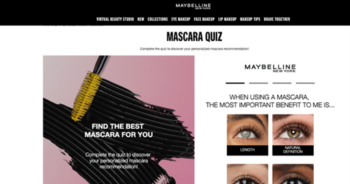
People love to hear about themselves and are haplessly prone to gratuitous compliments. I mean, who doesn’t want to hear things about themselves, especially good things. Many consulting firms make good use of “tests” or “assessments” to provide a one-two punch of personalized feedback. The first part of the assessment sings the virtues of the firm or person. ‘My, what awesome leadership you have! Your customer experience practices are top notch, but there’s this one little thing’. Amazingly, the consulting firm always has the solution for what ails you. Personal appeals to consumers’ vanity can and does move the needle every day.
Ask for the Supersize
Sometimes, very simple nudges can be effective. Just six words, “Would you like to Supersize that?” can have a large impact on consumers’ decision-making. Industry estimates show about 30-50% acceptance rates[14] in restaurant settings and, in other places, such as airport bars, experiencing a 70-80% success rate. Sometimes all you have to do to nudge behavior is to ask. Eventually, someone will say yes – perhaps more readily than you might think.
Sweep Barriers
The biggest obstacle to behavioral change is the barrier to change. The higher the barrier, the less likely we are to see behavior change. The biggest reason people don’t buy EVs is that they see public charging as an uncertain inconvenience. As of 2025, many public chargers require a specific app, and quite often, they are out of service. On top of that, charging at a high-speed (level 3) charger can take 30 minutes or more, versus 10 minutes or less for a gas station. Therefore, the number one thing makers of EVs can do right now to drive adoption is not to increase range or charging time (although that can help), but to make the public charging experience better by removing barriers.
Companies like Amazon know how to make it easy. Easy login, one-click buying, and free delivery for Prime customers have greatly contributed to their success. Find out where those “friction” points exist in the customer experience and just don’t make them better – if possible, remove them completely.
Social Proof

As social animals, we often look for social cues for what to do, especially when uncertain. Don’t think those political signs make a difference? Think again. A study by Donald Green at Columbia University found that it does influence voting behavior, albeit modestly[15].
We are influenced by what others think. Countless studies from the 1960s until now show the power of conformity. That’s why ratings are so darn important; people are in a hurry and take cognitive shortcuts to understand value. Social validation does that. So, if you want to influence human behavior, either get people to endorse your products or figure out a way to make it seem like most people love what your product or service does.
Scarcity
Everyone knows the story of when they eliminated the original formula of Coke in favor of “New Coke” in 1985. Hailed as marketing genius, it was more likely a screw-up turned serendipity. Nonetheless, traditional Coke flew off the shelf. So did Twinkies, Sriracha, and other varieties of food when they were threatened with extinction. Remember the toilet paper hoarding craze at the beginning of COVID? Humans are a skittish lot, and when they sense scarcity of things they like, even a little bit, they will flock to it. By keeping your products and services a bit harder to get, especially if they have long been high-volume, you can increase demand and potentially profitability.
Anchoring
It’s no secret that the most popular wine order at a restaurant is the second cheapest on the list, regardless of total price. Why? Because we set mental baselines based on only the information presented. So, if we set the cheapest wine at $10 and the second cheapest at $15, or if we set the cheapest wine at $50 and the second at $75, the take rates might not be the same, but the ratio between them is unlikely to change. Anchoring is an important way to influence behavior, especially in novel environments. Those old-time Ronco television commercials made good use of this tactic by saying “limit 10 per customer”, invoking both scarcity and anchoring to sweeten the influence of the deal. Apple is a pro when it comes to this tactic, establishing a relatively high baseline for their products and then offering a frustrating equal reach to upgraded products.
Framing
Reframing situations is also very important in influencing customer behavior. Years ago, we were working on an insurance product that was based on how individuals drive, called usage-based insurance. While this appealed to some, most people hated the idea of their information being tracked and used to set their rates. They felt their personal information was going to be used against them with no positive benefit. We reframed the scenario by describing how current rates are set based on your demography, your zip code, assets, and other factors not necessarily directly linked to your driving behavior. To put a finer point on it, we developed a mock ad that showed a picture of a 20-something-looking hooligan sitting on the hood of a beat-up Dodge Charger with the caption: “Would you rather have your rates set on Brandon’s driving, or your own?” This re-framing invoked a sense of indignation that they weren’t being judged by their own driving merit, and take rates increased exponentially for the new product. How services and products are framed will drive adoption.
Loss Aversion
In my marketing research class, I would put up this sign and ask folks how they felt about it. While many in the class didn’t get it, the runners did. They hated it. Why? No one wants to be reminded that they have 12.1 miles to go (a loss); they want to know what they have accomplished (again).

A long series of research, starting with Kahneman and Tversky’s Prospect Theory[16] found that people are more sensitive to losses than gains. Therefore, you are much happier knowing what you accomplished than the miles ahead. Use this to your advantage in communication. By expressing things in terms of loss, you can motivate action more than in terms of gain.
“Reading Dave Fish’s articles on CustomerThink will give you an edge in the workplace and your co-workers will think you are well informed.”
“If you don’t read Dave Fish’s articles on CustomerThink, you will lose your edge in the workplace, and your co-workers will think you are uninformed.”
Perhaps neither is motivational to you, but if one is more powerful in motivating you to read my articles, it would be the second one.
Similar to Me
We like people who seem like us. Why, because it reinforces our self-worth and self-esteem. Tajfel and Turner called this Social Identify Theory[17]. While we might not like it, birds of a feather do flock together – whether that’s based on demography or ‘deep level’ attitudinal beliefs. For example, simply changing the signature name of a letter to match the gender and ethnicity of the recipient will increase open rates.
Here, the case for diversity can be made. If you want to attract a diverse clientele, you had better have a diverse set of salespeople. Longo Toyota of Los Angeles has long known that diversity is a key to good business. Being one of the largest Toyota dealers on the planet, they have reaped the benefits of having a diverse workforce. With a staff that can collectively speak more than 20 languages, they can and do attract a large and broad clientele group. While diversity initiatives seem to be unfashionable for some at the moment, they make good business sense and are another way to influence consumer behavior in your favor.
Be Influential
“A plan without action is not a plan. It’s a speech,” is a quote attributed to T. Boone Pickens. While Mr. Pickens did not always assert the best judgment [18], I think it is a fair reflection on the state of Customer Experience. We have many webinars, blogs, and books being written on what we should do, and a paucity of methods to spur action.
Also, I think it is important to note that human behavior is not something that can be “driven.” At best, you can attempt to “sail” it. That is, individuals all have free will, with many competing forces influencing their behavior. As customer experience designers, our best effort is co-creating the experiences that will most likely result in the desired behavioral outcome. So, while I shared many tactics, they are not foolproof, nor will they always be effective in all scenarios with all people. I hope that some of these effective tactics to nudge human behavior will be used as such for pro-social purposes, to improve the experience for customers, and maybe make things just a bit better for everyone.
Notes
[1] https://magazine.northeast.aaa.com/daily/life/cars-trucks/auto-history/a-seat-belt-history-timeline/
[2] https://www.nhtsa.gov/vehicle-safety/seat-belts#
[3] https://www.nsc.org/getmedia/396acff8-05c5-49e3-8110-9979048a45fe/seat-belts-problem.pdf.aspx
[4] https://www.amazon.com/Nudge-Improving-Decisions-Health-Happiness/dp/014311526X
[5] https://www.simplypsychology.org/bandura.html
[6] https://www.sciencedirect.com/science/article/pii/S0022435916300458
[7] https://www.sciencedirect.com/science/article/abs/pii/S0165176513001286
[8] https://www.feedingamerica.org/our-work/reduce-food-waste#
[9] https://academic.oup.com/jcr/article-abstract/41/5/1301/2962097
[10] https://www.pnas.org/doi/10.1073/pnas.2107346118#
[11] https://www.amazon.com/Influence-Psychology-Persuasion-Robert-Cialdini/dp/006124189X
[12] https://www.als.org/ibc
[13] https://psycnet.apa.org/record/1977-08183-001
[14] https://carthook.com/blogs/wiki/what-is-a-good-upsell-percentage
[15] https://www.npr.org/2022/10/01/1124484573/midterm-elections-political-signs#
[16] https://www.jstor.org/stable/1914185
[17] https://www.simplypsychology.org/social-identity-theory.html
[18] Pickens was the subject of controversy in 2009 after he had a construction crew go to his grandmother’s former home remove a slab of driveway concrete that he had signed as a child which was owned by someone else at the time. The current owner of the home asserted ownership, and the slab was returned. A judge ruled that the slab belonged to the current homeowner in 2010.
Right, David.
If I am nudged to look at a product or service, I become preinclined, and the nudge(r) creates value for me