


Just upgrading a touchpoint is so 2016. Comparing current and desired
experiences is a good foundation for a CX plan.
Much has been written about how to develop a customer journey map. It’s a
popular topic, and many professionals across different experience areas
have put their own spin on the process. As a result, a standard method for
developing a customer journey map just doesn’t exist. Typically, people
with process backgrounds develop customer journey maps that look like
process flow maps. Others with knowledge in the graphic arts discipline use
pictures and develop a more creative depiction of a customer’s experience
with their company.
None of these approaches is right or wrong, as long as the map achieves the
goal of improving the customer experience. I’ve seen many great looking
customer journey maps—most required considerable investment by a variety of
stakeholders—that become wall art and nothing more for their organizations.
Sure, they might raise red alerts about existing processes and touchpoints
that need repair. However, they fall short of delivering the ROI expected
from them. Why? Developing a customer journey map is a starting point. It’s
what you do with the map after it’s created that makes the difference
between happier customers and wasted exercise.
Let’s start with a definition.
A customer journey map is a visual
representation of the end-to-end service journey of a customer, including
customer expectations before the first encounter. It should tell the story
of a customer’s interactions with service and departments across your
company.
This includes illustrating the full range of tangible and
quantitative interactions, triggers and touchpoints, as well as the
intangible and qualitative motivations, the joys and the frustrations a
customer experiences when interacting with your company.
That’s all well and good. But, the visual representation of a customer’s
journey through existing touchpoints is only a baseline. Once you have it,
your work is just beginning.
Here’s a look at three ways you can put the customer journey map to work
for your organization.
Map your CX future, prioritize improvements.
Our company has had success using our current customer journey map to
build a future map. It offers a view of what we want our customer
experience to be. Documenting your “as is” and “to be” statements and
then comparing the two is where the real work gets done to help ensure
your company is a consistent pleasure with which to do business. We
built our current map based on internal and external interviews, data
on customer feedback and our best knowledge about how customer
touchpoints flow internally.
Once we had our future map, we looked at all the variances between it and
the current map. We made a list of 30 key differences—more opportunities
for self-service, fewer handoffs, online issue resolutions, etc. Then we
gave each member of the executive team 10 orange stickers, and asked them
to vote on which items had the highest priority and the greatest impact on
customer experience. We told them they could put all their stickers on one
item, or distribute them among as many items as they wanted.
As people milled around and put stickers on the map, it seemed chaotic at
first, but we found at the end of the process there were three or four
items that everyone agreed were highest priority. We put those at the top
of the list, and then evaluated all the items based on level of effort and
degree of impact.
What we produced through this process was a roadmap of all the things the
CX team should coordinate and accomplish over the next few years. One of
the beauties of the process was that our priority list had executive buy-in
because of their involvement in the project from the very beginning. They
were the ones who voted for the items and asked that they be priorities for
the CX team to address.
Leverage your map to motivate CX teams.
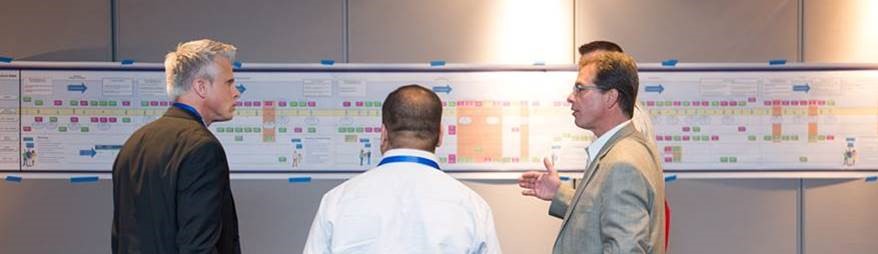
Our company’s map is about 25 feet long. I take it with me to many
meetings and unroll it on the conference table or put it on the wall in
the conference room. It makes it so much easier to explain to services
department staff, for example, why certain processes, behaviors and
attitudes are important to meet certain customer expectations. You can
show what happens before the customer gets to them and after the
customer goes to the next step, and where customers are happy and where
they are unhappy. I’ve seen many “aha moments” with customer-facing
teams when they see their customers’ experience from this perspective.
I take the maps to workshops with teams that may not be customer facing,
but impact the experience (finance, billing, etc.), as well. The maps help
everyone see that they don’t work in a vacuum; rather, they get a clear
picture of how their actions influence other parts of the customer journey.
Use it to help employees know your customers better.
Some CX organizations take their journey maps and build entire customer
rooms around them devoted to helping the team know who their customers
are and share in their experiences. You can walk through the footsteps
of the customer. CX team members can listen to a recorded call or try
to order an upgrade to a certain product on the website. It’s a great
way to have CX team members get an outside-in look at their
organization from the customer’s point of view.
One health insurance company in Minnesota used life-size cutouts of human
figures and had a story with each one. It was cool because it humanized
processes for the employees. Another insurance company in Ohio had
segmented all its customers and developed a story about each segment—the
single mom, for example, her job, her salary, her challenges—and displayed
the stories on posters in the headquarters’ conference room. The walls of
the room were covered with them. It was all designed around understanding
customers better, but it was also the first step in the company’s customer
journey mapping process. The goal was to use the different stories to
develop a journey map for each customer segment. Once completed, the maps
would be featured in the conference room along with the “people posters.”
What will you do?
There are many other ways to use customer journey maps. We have taken ours
to user conferences to show our customers, and we highlight areas in which
we have projects under way. It helps us have conversations with customers
about how we’re working to improve their experience.
Especially with today’s emphasis on storytelling as a strategic business
tool, the value of mapping the customer journey is clear. The maps
illustrate the interaction between company and customer at every point in a
clear, understandable way. For the company that uses them wisely, they can
be the go-to source of ideas for ongoing customer experience improvement.
Stay tuned for more on this topic in our “part II” article on customer
journey map dos and don’ts: controlling complexity and other tools for
keeping your project on track.
Anticipating, and preparing for, future CX direction is given too little thought, so glad to see it well-addressed here. Ancient Chinese general Sun Tzu wrote: “The art of war teaches us to rely not on the likelihood of the enemy’s not coming, but on our own readiness to receive him; not on the chance of his not attacking, but rather on the fact that we have made our position unassailable.” Preparation and action represent a winning CX combination.
Hi Nancy!
Great article!
I love that you share lots of ‘how to’ information to help everyone take their plans to the next level. I also really appreciated you emphasising the need to (1) Take action on your Journey Maps (don’t let them turn into wall art!) (2) Think about your “tomorrow” map and (3) Set clear priorities of what gets done and when. Life and business just seem to get faster and our task lists longer. I appreciate you sharing ways for people to make sure they are getting more of the right stuff done. I think we all need more of that!
Krista