


No matter how strong your marketing and sales results were in 2016, they
can be even better in 2017, especially if you focus on your Lead-to-Revenue
(L2R) strategy.
We define L2R as: A marketing and sales framework that
optimizes people, processes and technology in a synchronized manner to
produce higher revenue, shortened sales cycles and improved close rates.
Lead-to-revenue spans every activity from initial marketing outreach, to
lead nurture, sales engagement and close. L2R success is measured by
revenue and profitability metrics.
Last month, we completed our annual B2B marketing and Lead-to-Revenue
survey to discover and present the current concerns that occupy the minds
of sales and marketing executives, as well as the trends that will most
impact their future. The survey report, which you can download here, shows
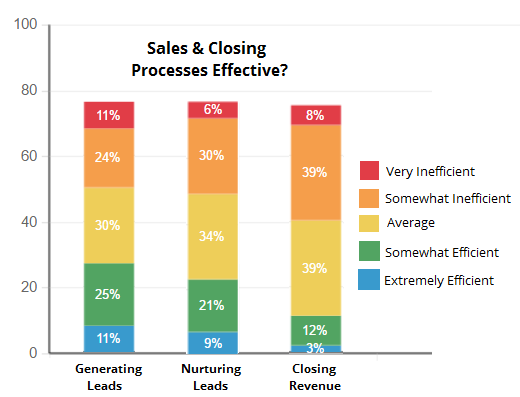
that lead flow and lead quality are perennial issues and that marketing is
not perceived as making a significant impact on revenue.
If you are the chief marketing executive at your company, this should give
you pause because your value to the organization could be in question. If
you are the chief sales executive, it will make it more difficult to
achieve your target revenue numbers. And if you are the CEO, it is best
that you address this situation quickly and correctly, or there will be
explaining to do to shareholders and/or board members.
Another disturbing result from our survey last month is that 62 percent of
respondents report that their companies spend less than 10 percent of
revenue on marketing (including personnel, technology and program
expenses). This is not surprising given the lack of perceived value, but it
does point out that proving Marketing’s contribution to revenue should be
at the top of your list of 2017 goals. And perhaps the best way to
accomplish this is to focus your time and budget on L2R. This will position
you for success by aligning your marketing and sales models so that all
your activities are more effective and efficient.
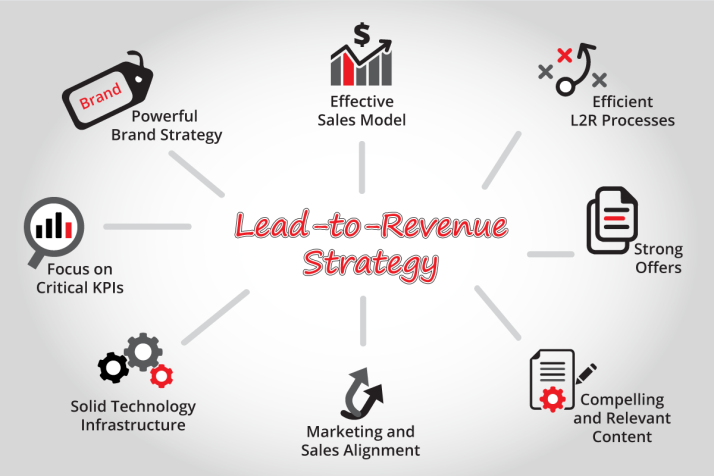
These eight components need to work in harmony to support the L2R
framework:
- A powerful brand strategy
- An effective sales model
- Efficient L2R processes
- Strong offers
- Compelling and relevant content
- Total alignment between marketing and sales
- Solid technology infrastructure
- Focus on critical KPIs
I will cover each of these components in more detail in subsequent
articles, as all are necessary to ensuring you have the right quantity and
quality of inbound leads, as well as the right tactics in
place to convert them. An overarching theme of L2R is to ensure that every
aspect of the strategy (people, process, technology) is optimized to
support the desired end result — usually more profitable revenue. And of
course, you will want to tightly align your marketing and sales metrics.
Keep in mind that Lead-to-Revenue is not just a new tactic to boost revenue
performance. Rather, it is a strategy, backed up by multiple (and flexible)
tactics that can have a profound impact on every part of your marketing and
sales operations. If executed professionally, L2R can deliver extremely
important benefits, including:
- Increasing your sales close rate.
- Decreasing your sales cycle time.
- Shortening the amount of pipeline coverage needed.
- Improving critical conversion ratios, like:
- Inquiry to marketing qualified lead (MQL)
- MQL to sales qualified lead (SQL)
- SQL to sales opportunity
- Opportunity to closed sale
- Achieving world peace (just kidding on this one!)
One note: Although it is important to success, L2R is not just about making
what you are doing more efficient. You need to start with a strategy that
will make you effective. Or, to put it another way, creating more
efficiency in a poorly designed system will just help you go broke faster.
Stay engaged — there’s a lot more coming from me about the specifics of
Lead-to-Revenue in future articles. I will keep it relevant and actionable
and I’ll always welcome your thoughts on the topics at hand.
I am happy to see such a simple breakout-ready to use.